
The Jungle Was His Lab. The Spirit Was His Guide. (with Dr. Paul Alan Cox)
Paul Alan Cox grew up the son of a Grand Teton park ranger and a scientist. He graduated from BYU, earned his PhD at Harvard, and was named one of Time magazine's 11 heroes of medicine for searching the world's rainforests for cures that no laboratory had found. President Reagan named him a Presidential Young Investigator. Sweden made him the first King Carl XVI Gustaf Professor of Environmental Biology at Uppsala. The Goldman Prize, sometimes called the Nobel Prize for the environment, came in 1997 for saving the Samoan rainforest. None of those credentials are what shaped his faith. What shaped his faith was a coconut basket on a thatched mat, a mother dying of cancer, and a hurricane in Samoa that nearly took everything.
In this episode of Why We Believe, host Nathan Gwilliam sits down with Paul to trace the faith behind those credentials. Paul shares the morning he watched a ranger named Red Rowe slip away to read his New Testament at dawn, and how that one moment sent him into the Sermon on the Mount as a boy. He describes the Samoan branch president who emptied his coconut basket of every coin he had on jars of food for a sick missionary. He talks about losing his mother to cancer and pivoting his life's work toward ethnomedicine, searching jungle healers for drugs that could fight HIV, ALS, and Alzheimer's. He closes with the night a hurricane-driven tsunami nearly took him, his wife Barbara, and their four children, and what saved his peace was a sealing made years before in a temple.
Loved this episode? Hit Follow and share it with someone who needs to hear that the same faith that holds a family together in a tsunami can hold theirs together in anything. Leave a review for Why We Believe on Apple Podcasts, Spotify, or YouTube. Your support helps us bring more inspiring conversations like this to listeners everywhere!
Visit WhyWeBelieve.com to download Your FREE guide on 13 Strategies to Increase Faith in Jesus Christ, to support you as you strengthen your own testimony of Jesus Christ. EndFragment
Follow the Why We Believe Show - Website: WhyWeBelieve.com | YouTube: @WhyWeBelieveShow | LinkedIn: @Why-We-Believe-Show | Instagram: @WhyWeBelievePodcast
Follow Nathan Gwilliam - LinkedIn: @NathanGwilliam
Follow Dr. Paul Alan Cox - Website: brainchemistrylabs.org/paul-alan-cox EndFragment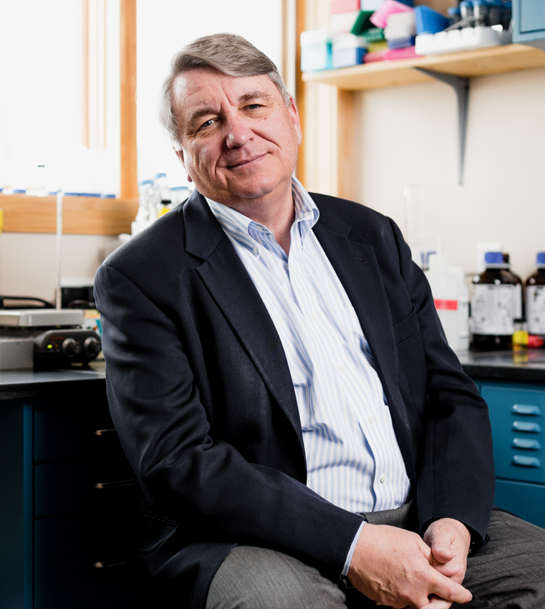
He Built a School for a Samoan Village Without Knowing It Would One Day Save His Life
It was night in a remote Samoan village. The hurricane had been building all day, and when the wave came it came at the village in a single black mass. Paul Alan Cox, his wife Barbara, and their four children were inside a school. Around them, five hundred villagers. The waves were taking out the foundation. The roof was ripping off. Paul and Barbara turned to each other and said goodbye.
Paul Alan Cox is one of the most distinguished scientists in The Church of Jesus Christ of Latter-day Saints. He graduated valedictorian from BYU, earned his PhD at Harvard, and was named one of Time magazine's 11 heroes of medicine. Sweden made him the first King Carl XVI Gustaf Professor of Environmental Biology at Uppsala. He has spent four decades alone in the world's most remote rainforests, searching for cures that no laboratory had found.
In a recent episode of Why We Believe, host Nathan Gwilliam sits down with Paul to trace the faith behind all of it. Paul tells the story of how that night in the school ended, and what saved his peace at what he thought was the last moment of his life.
A Trail-Crew Worker Named Red Rowe
Paul grew up the son of a Grand Teton National Park ranger and a fisheries scientist. When he was a boy, his father ran a trail crew up in the Tetons, and Paul noticed something about one of the crew's best workers. A man named Red Rowe would disappear every morning at six and come back later. Paul finally asked what he was doing. Red told him, "I like to go start my day right by reading the Good Book."
Red was not a member of Paul's faith. But Paul thought what he was doing was impressive. So Paul started reading too, every morning up in the Tetons, working through the New Testament. When he hit Matthew 5, the Sermon on the Mount, something opened in him. He realized no human being could have written that. To love your enemies, to do your alms in secret, to not even allow anger or lust to enter your heart. Paul says his testimony was rooted first in the New Testament. The Book of Mormon came later and knocked his socks off.
A Coconut Basket on a Thatched Mat
Paul served his mission in Samoa as a young man, sent to one of the most remote places in the islands. He got very ill out there. The branch president was a man who walked eight miles most days of the week to come teach him the Samoan language. One day Paul could hardly get up off his mat. He told the branch president he was too sick for a lesson. The man told him that was not why he had come.
He had a coconut basket. He spilled the contents onto the mat. Little jars of pears, condensed milk, ginger-snap cookies. Paul realized that this man, who was very poor, had taken every coin he had in the world, walked to the small trader's shop, and spent it all on food from Paul's homeland. Paul says he has been trying to pay back the contents of that basket ever since. He says he still has a lot more he can give.
The Mother He Could Not Save
Years later, Paul's mother was dying of breast cancer. He left his job at Berkeley to come home. He says he was going to pump gas to help take care of her, but BYU made a hole for him on the faculty. He wanted to pivot his work toward medicine. He was reading Robert Coles, the Harvard sociologist, who wrote that when your talents and your passions intersect a deep societal need, you are hearing a call.
He told the National Cancer Institute he had maybe a one percent chance of finding a new drug. They said they thought he had three, and if it was three percent he would give his life to it. A White House award came with money to do any research he wanted. He took Barbara and the children to the most remote rainforest they could find and apprenticed with traditional healers. They did not find a cure for breast cancer but they found Prostratin, a compound that became an HIV/AIDS drug. That was the moment he understood his stewardship.
The Book of Mormon Reads Like a Fractal
Paul once studied with Benoit Mandelbrot, the mathematician who invented the field of fractals, at Harvard. The genius of a fractal, Paul says, is that no matter how far you zoom in, you keep finding more information. That is how he reads the Book of Mormon. At the broadest level, he says, it is the most important national security document in the United States, showing how to protect freedom. At the closest level, it speaks to him personally and directly.
He calls it breaking the fourth wall. Paul says the Book of Mormon turns and speaks to him directly. One November day in Cambridge he was running to dinner when he passed a man asking for help on the street. A block later, King Benjamin's verse from Mosiah 4 hit him — we are all beggars, do not send the beggar away. Paul turned around, walked the man into a restaurant, gave the waitress half his cash, and told her to feed him. He says if he had kept walking, the man might have died that night. The Book of Mormon caught him in time.
The School That Became His Ark
Years after his mission, Paul went back to Samoa with his family to do the work of his life. They raised the money to build a school for the village. Then a hurricane came and drove a tsunami at them. The school was where everyone went. The five hundred villagers, Paul, Barbara, the four children.
When the waves started taking the foundation out and the roof started peeling, Paul and Barbara said goodbye to each other. They thought these were their last moments. But Paul says in that moment he realized something. The most precious gift he had was not the school he had built. It was the sealing he and Barbara had made in the temple. He had the absolute knowledge that no matter what happened to them in this life, he would be together with his wife and his children in the next life, because of the seal and the temple.
They lived. They walked out of that school. Paul says when Nathan asked at the end of the interview why he believes, that night was part of his answer. He cannot help it.
Key Takeaways
Paul Alan Cox's story is not about credentials. It is about a steady willingness to let God redirect a life. God uses the trials that break our hearts to redirect our talents toward those who need them most. Acting on the Book of Mormon's verses turns scripture into real service, the way a run to dinner turned into a meal for a hungry man. Catching small service moments is what consecration looks like. And the temple sealing gives covenant families a peace no crisis can take.
Thank you for reading this week's blog post inspired by the Why We Believe show. If you are interested in more stories like this, you can check out our other blog posts and episodes at WhyWeBelieve.com.
Follow the Why We Believe Show: Website: WhyWeBelieve.com | YouTube: @WhyWeBelieveShow | LinkedIn: @Why-We-Believe-Show | Instagram: @WhyWeBelievePodcast
Follow Nathan Gwilliam: LinkedIn: @NathanGwilliam
Follow Dr. Paul Alan Cox: Website: brainchemistrylabs.org/paul-alan-cox